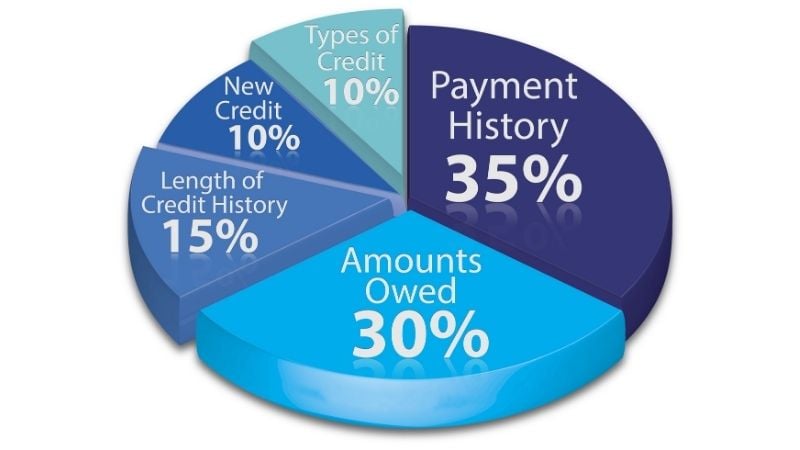
Your credit score plays a big role in your financial future, from buying a car to getting a mortgage on your first home. Protecting it matters, even when life gets hard.
If you've recently lost a job or faced a financial setback, income loss can affect your credit. Here’s what you can do to limit the damage and start rebuilding.
Understanding the Basics of Your Credit Score
Your credit score is based on what you borrow from lenders and how quickly you're able to pay it back. When you borrow money from a creditor, you agree to pay that money back within a certain time frame.
Each loan and loan payment is tracked in something called your credit report, which is a log of how much you borrowed and how quickly you pay it back. Lenders use a number called a credit score as shorthand for how "good" you are at paying back your loans. Most people's credit scores fall between 600 and 750 – and the higher, the better. Quick, sizable, and consistent loan payments are the primary factors used to determine your credit score.
Twin Cities Habitat's TruePath Mortgage, offered through TCHFH Lending, Inc., is designed for first-time homebuyers and includes personalized support to help you understand what lenders look for.
Why Do You Need a Credit Score to Buy Your First Home?
Because homes cost more than most people have saved, creditors offer a home loan, or a mortgage, to people looking to buy a home, and your credit score can make a huge difference. Different mortgage providers have different criteria for deciding whether or not to grant a mortgage to a first-time homebuyer, but most require the following:
- Stable employment
- Some money in savings
- Low debt payments
- A good credit score
Like all creditors, mortgage lenders want proof that you're responsible with money you've been loaned. They want to see a track record of frequent and consistent payment on other loans, reasonable credit utilization, and a good reason to believe you'll be able to keep paying until the mortgage is paid off.
Consistent payment (along with other tips like keeping your credit utilization low, reducing debt, and limiting lines of credit) is key to achieving and maintaining a good credit score. The higher your credit score, the more likely you are to be awarded a mortgage – and you'll receive a better interest rate on that mortgage, too.
The Cost of Missed Payments
When income drops, keeping up with bills gets harder. The first payments to slip are often credit cards, loans, and other recurring accounts, and that's where the credit damage begins.
A single missed payment can lower your credit score significantly, and the effect compounds the longer the gap goes. Once a payment is 30 days late, your lender can report it to the credit bureaus. At 60 or 90 days, the impact on your score gets worse. A missed payment can stay on your credit report for up to seven years.
Job loss itself doesn't appear on your credit report, but the financial strain it causes often does.
Tips to Improve Your Credit Score Before Buying Your First Home
Financial hardship can leave a mark on your credit, but it doesn’t have to be permanent. The good news is that you can improve your credit score over time with these proactive tips:
-
Check your credit report for errors. Mistakes can drag down your score. If you spot something wrong, like a payment you made that shows as missed or an account you didn't open, contact the lender to dispute it.
-
Pay down small balances. Multiple small balances across cards hurt your score more than one larger balance. Pay them off and stick to one or two cards.
-
Stay under 30 percent of your credit limit. If your limit is $1,000, try not to carry more than $300 at a time, even if you pay in full each month.
-
Use your cards, but don't overdo it. A zero balance can actually work against you. Use your cards for small purchases you can pay off and keep balances low.
-
Pay on time, every time. Set a phone reminder or calendar alert so you never miss a due date. Consistent on-time payments are the fastest way to build your score back up.
- Don't open new lines of credit. Every new card or loan shows up on your report. Too many open accounts, especially without a payoff plan, can hurt your score.
How to Check Your Credit Score and Credit Report for Free
Most banks and credit card apps let you check your credit score for free anytime. Tools like Credit Karma also offer free score monitoring. Your score gives you a quick snapshot, but your full credit report shows the details behind it, like payment history and open accounts.
The three credit reporting agencies, or credit bureaus (Equifax, Experian, and TransUnion), let you check your credit report for free once a year.
You can stagger your reports, too, so you get three credit reports every year. (All three bureaus should have the same information, so the order doesn't matter.) Even if you don't have a big purchase like a home to plan for, it's a great idea to dig into your credit report often. It gives you much more insight into how your loans, spending, and payments impact your credit than your credit score can.
You can request your free credit report online, by phone, or by mail:
- Request your free credit report online from AnnualCreditReport.com.
- Call 1-877-322-8228. Deaf and hard of hearing consumers can access the TTY service by calling 711 and referring the Relay Operator to 1-800-821-7232.
- Complete the Annual Credit Report Request Form and mail it to:
- Annual Credit Report Request Service
PO Box 105281
Atlanta, GA 30348-5281
Your Credit Score Doesn't Have to Be Perfect to Start
Financial hardship is hard. But it doesn't have to be the end of your homeownership journey; it can be the beginning of a new plan.
Twin Cities Habitat for Humanity's Financial Coaching Program pairs you with a homeownership advisor who can help you improve your credit, reduce debt, and work toward mortgage readiness at your own pace.
Not sure where you stand? Learn how to qualify for our homeownership program or explore what financial coaching looks like in practice.
When you're ready to take the next step, we're here to help.


 Twin Cities Habitat for Humanity



 Twin Cities Habitat for Humanity : 1:39 PM on August 4, 2020