With a split House of Representatives, looming elections, and a two-year budget already in place, the expectations for this year’s state legislative session weren’t particularly high. But this didn’t stop our advocacy work at the Capitol, and in May the 2026 session wrapped up with some productive outcomes for housing and affordable homeownership, as well as ongoing efforts for next year. These wins remind us that advocacy is a powerful tool to advance our mission, and one that works!
Habitat on the Hill
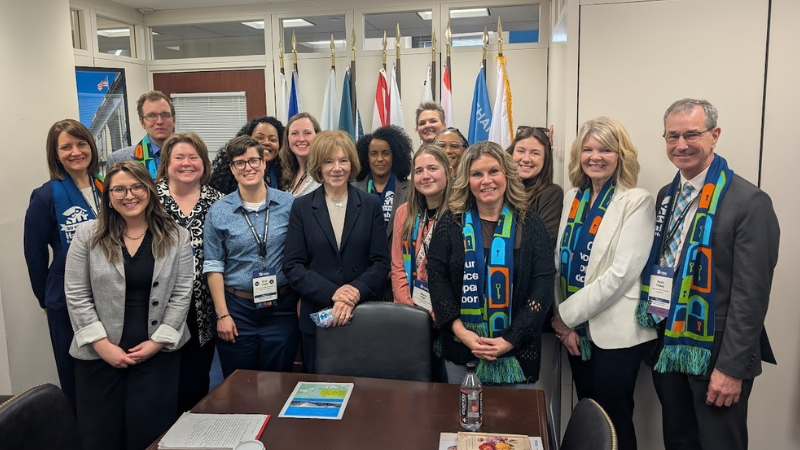
A highlight of every legislative session is Habitat on Hill, where supporters from across the state gather at the state Capitol to discuss policy priorities, meet with lawmakers, and make some noise about investing in affordable homeownership. The day is always filled with excitement and energy, and this year was no different.
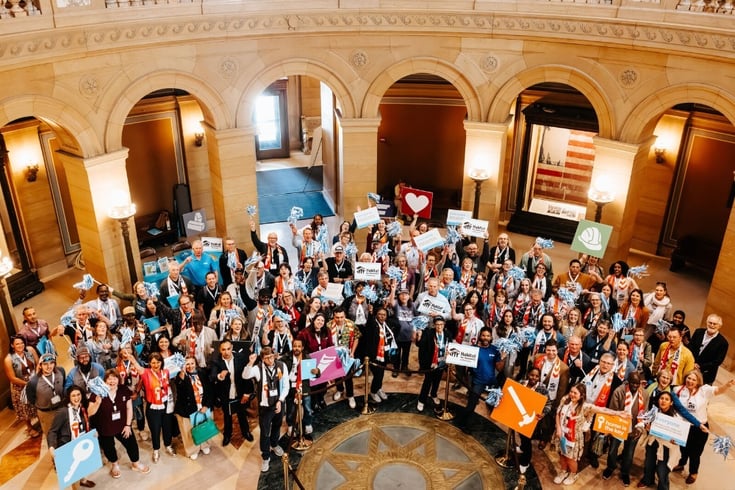 Habitat on the Hill supporters in the Capitol rotunda.
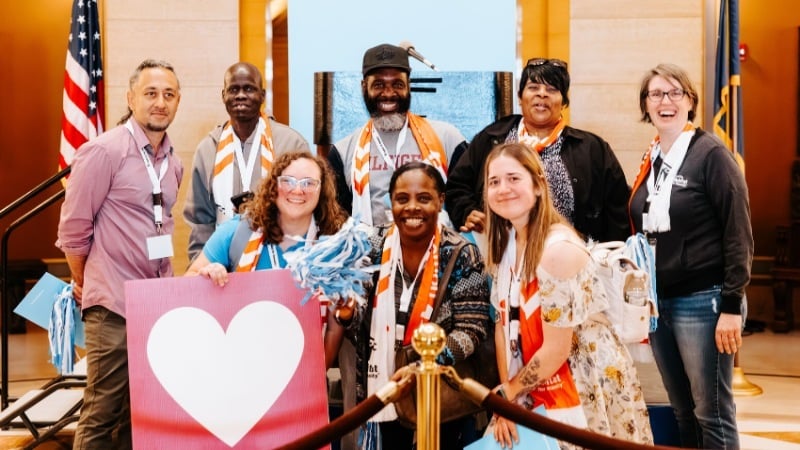
We gladly welcomed over 120 advocates, staff, and homeowners this year, and they represented Habitat affiliates and legislative districts from all over Minnesota. Attendees heard from housing champions such as Representatives Howard and Igo, co-chairs of the Housing Finance and Policy Committee; Representative Rehrauer, another member of the committee; and Senator Boldon, Vice Chair of the housing committee in the Senate. We also heard an inspiring example of how transformative homeownership can be from Maria, a Habitat homeowner from Evelyth, Minnesota. She also reflected on the importance of advocacy:
“Every conversation you have, every relationship you build, every policy you help move forward. It matters. It adds up. It builds opportunity.”
We were grateful to have many Habitat homeowners join us not only as speakers, but also advocates. Eric, a homeowner with Twin Cities Habitat, shared about his time at Habitat on the Hill:
“Visiting the Capitol for the first time was a powerful experience. Being surrounded by so much history reminded me of how important it is to stay engaged in the process. The four housing bills discussed during the event represent meaningful steps toward stability, fair housing prices, and the possibility of generational wealth for families like mine.”
The four bills Eric mentioned included HOA reform, the Starter Homes Act, Housing Infrastructure bonds, and State Housing Tax Credits. Learn more about them and our other priorities below.
Session Wins
One of most exciting wins this year was the passage of the HOA Bill of Rights. We’ve known for a long time that homeowners associations need to be reformed in a way that protects affordability and fairness for homeowners while still functioning well for boards and management companies. After a lot of conversations, research, and compromises, we feel confident in the improvements this bill will provide. Stay tuned, as we’ll soon go more in depth on everything that was in this bill and what it means for homeowners!
Another priority was investing in Housing Infrastructure Bonds, which received $100 million in the final budget. These funds help develop housing opportunities across the housing continuum, including homeownership. Additionally, the legislature allocated an additional $40 million to the Family Homelessness Prevention and Assistance Program, which provides rental and mortgage assistance to households in need.
Lastly, the legislature passed $1 million for The Heights, which will help our development partners continue building a transformational community in St. Paul's Greater East Side. In a year when nothing was promised, we are thrilled to celebrate these significant investments into affordable housing and homeownership programs.
Where the Work Continues
There were a few efforts that didn’t make it out of this year’s legislative session, including extending the State housing tax credit, the Starter Homes Act, and insurance reform.
The Starter Homes Act, aimed at increasing the supply of homes and providing more choice for buyers through land use and zoning reform, didn’t gain the necessary traction to get out of committee. Despite gaining bipartisan support, concerns among local leaders over state control dissuaded some lawmakers from voting for the bill. We will continue working with housing partners next year to engage lawmakers on the benefits this bill can provide.
As for insurance reform, a bill to provide funding for the Strengthen Minnesota Homes program did not move forward either. This program was established to help homeowners pay for fortified roofs with the goal of reducing property insurance costs. We’ll continue advocating for this and similar efforts that help address the cost of insurance for homeowners in future sessions.
It’s common for many of these efforts to take multiple years to get across the finish line (just like HOA reform!), and we are looking forward to continuing this work in the next session. As Eric reflected after Hill Day, “We have made progress, but there is still a long road ahead — and unity is essential.” Tackling the affordable housing crisis won’t happen through one bill, and we are grateful to work within a network of dedicated housing providers and advocates to advance meaningful solutions in our communities.
In the meantime, the work continues in other ways, and we’re already looking ahead to the November elections that will decide who will take up these seats next session. Stay up to date on all things voting, advocacy, and how to take action by signing up for action alerts below!


 Eva Goldfarb

 Eva Goldfarb : 8:58 AM on March 4, 2026
.jpg)