Renting and owning a home are very different. When you rent an apartment or home, your rent becomes profit for the owners. You never gain more value by paying more rent. On the other hand, paying a mortgage creates financial value that belongs to you. It is an investment that can be passed on.
What Is Equity in a Home?
The value you accumulate as a homeowner is called equity. Equity increases with every payment you make on your mortgage. It is the part of the home’s total value that you have paid off. When you have paid off your mortgage, you hold equity equal to the home’s value.
When you first get your mortgage, you hold no additional equity beyond what you paid as a down payment. The lender controls the rest. As you gain more equity, you create wealth. As long as you keep paying your mortgage, the lender can’t take equity away. Though if you take out a loan against the value of your home or take out another mortgage, you lose equity.
If you pay off your mortgage, you’ll hold 100% equity in your home. You can pass this wealth down. This is called generational wealth, wealth that grows and helps support future generations.
How Different Cultures Build Wealth Through Homeownership
Families around the world have been figuring this out for generations, and there's a lot we can learn from each other.
- In many Latino communities, the concept of "la casa familiar" emphasizes the family home as a cornerstone of financial security, often maintained across multiple generations.
- Asian families frequently practice collective saving strategies, where multiple family members contribute to purchasing property that benefits the entire extended family.
- Native American communities have traditionally viewed land ownership through a lens of stewardship and community benefit.
- African American families have historically used property ownership as a key strategy for overcoming systemic barriers to wealth accumulation.
All these different approaches get to the same truth: owning your home creates stability and opens up opportunities for your kids and their kids.
Why More Families Are Living Together
More and more families are realizing that living together–whether it's parents with adult kids or grandparents moving in–makes financial sense. You're not just saving money; you're building wealth together.
Here's how families are making it work:
- Everyone Pitches In for the Down Payment: Multiple family members can contribute to a larger down payment, reducing monthly mortgage costs and eliminating private mortgage insurance (PMI) sooner.
- Combine Your Incomes: Combining incomes from parents, adult children, or grandparents can qualify the family for larger loan amounts and better interest rates.
- Smart Home Improvements: Focus on improvements that add the most value, such as additional bedrooms, updated kitchens, or accessory dwelling units (ADUs) that can generate rental income.
- Teaching Your Kids About Money: Building generational wealth isn't just about accumulating assets—it's about ensuring future generations understand how to maintain and grow that wealth. Let your kids see the mortgage statement. Explain how each payment means you own a little more of your house. When you're doing home projects, get your teenagers involved and show them how that new bathroom adds value to your home. Talk to your young adults about credit scores, savings, and yes, even inheritance planning. The goal isn't just to pass down assets – it's to pass down the knowledge of how to grow them.
Equity in Owning vs. Renting
Getting a mortgage may seem complicated. But when you compare renting to homeownership, the wealth you can build in just a few years makes homeownership the clear winner. Plus, your mortgage will not go up if it is a “fixed rate” mortgage, while rents tend to fluctuate over time.
In June 2025, the median home listing price in Minneapolis was $325,000. For a $325,000, 30-year mortgage at a 7.0% interest rate, with a 20% down payment, your monthly mortgage payment would be $2,010.
The average rent for a 2-bedroom, single-family home apartment in Minneapolis is $1,495.
However, as you pay your mortgage, your equity grows.
- After a year of paying your mortgage, you would have just under $1,539 in equity
- In the second year, you would have about $7,830 in equity
- In the third year, you would have more than $14,300 in equity
What would happen if you stayed a renter during that time instead? You would not gain equity wealth.
For the average apartment, you would pay around $18,000 per year in rent—assuming it doesn’t rise in future yearsNone of that money would produce wealth for you—it would go to your landlord.
Building Wealth as a Single Parent
Being a single parent doesn't mean you can't build generational wealth – it just means you need to be a little more strategic about it. You've probably already developed the planning skills you need just from managing everything on your own.
Financial Scenarios:
- $45,000 income: Target $180,000 home, $850/month payment, $8,500 equity after 5 years
- $65,000 income: Target $260,000 home, $1,250/month payment, $12,000 equity after 5 years
Getting the Support You Need:
Twin Cities Habitat for Humanity has programs specifically designed to help people become mortgage-ready. Whether you need financial coaching to get your credit in shape or you want to explore their homeownership program, there's support available.
Tax Benefits of Homeownership
Homeowners get special tax benefits. The biggest is the deductions (tax savings) on your interest. Interest is the part of a mortgage payment that does not increase equity. It is a profit for the lender. Since you take this interest off your taxes, it saves you money when you file.
Increasing Your Home Value
As you increase your home’s value, the total amount of equity goes up. On average, home value slowly rises over time as the population grows. You can further boost the value of your home through projects, updates, and renovations.
Something as simple as new paint can raise a home’s value. So can bigger investments like a new roof or a deck. Regular home maintenance helps, too. It is up to you how much to invest to increase your home’s value and enjoy the benefits.
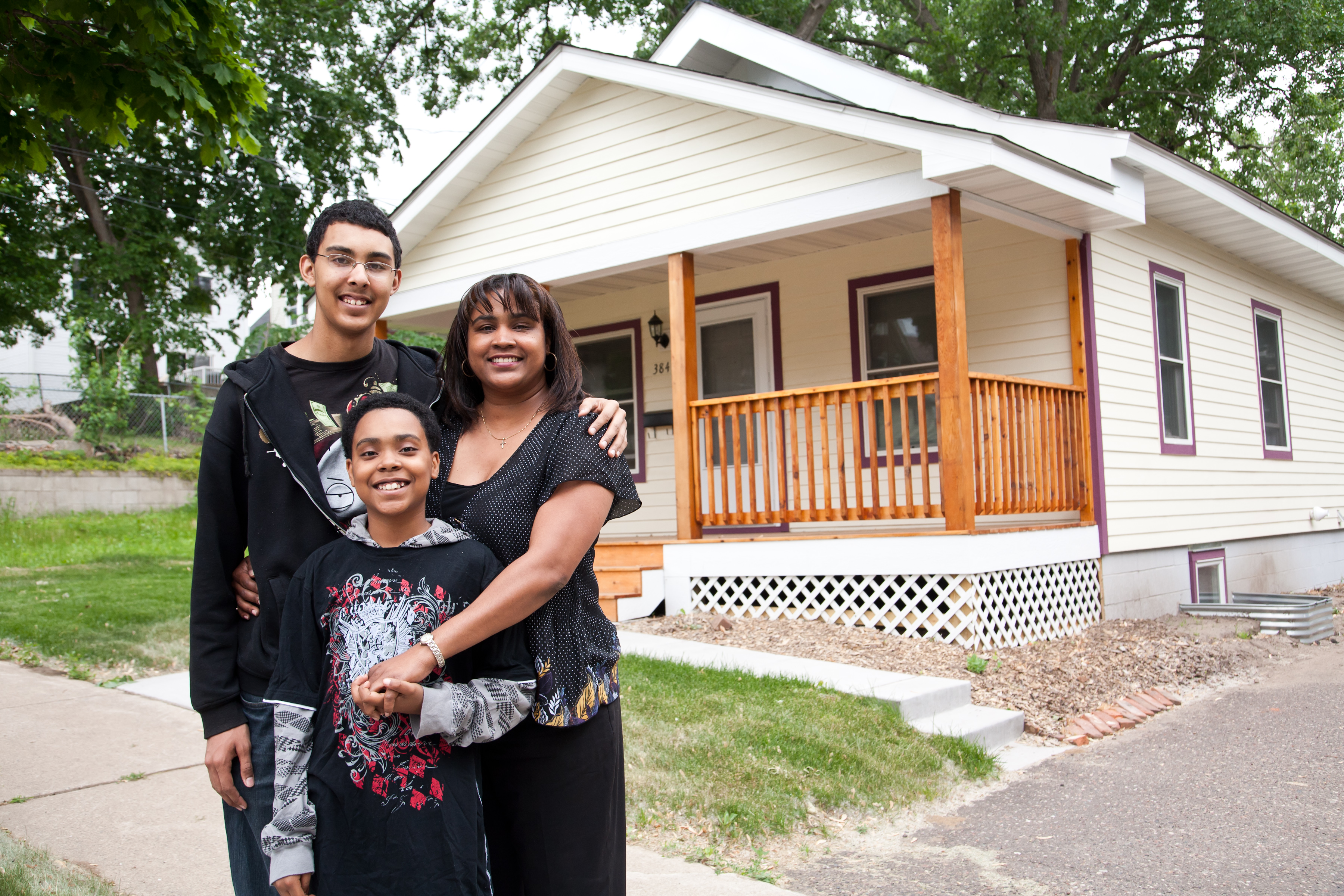
As you increase the value and equity of your home, you are building something that can be passed on to the next generation. Affordable housing not only helps to build generational wealth but also aids in closing the racial wealth gap. With better accessibility, there are more opportunities for minority families to achieve homeownership, not only for themselves, but for generations to come.


 Twin Cities Habitat for Humanity


 Twin Cities Habitat for Humanity : 9:32 AM on January 27, 2025