
 Guest Blogger
The Coast Guard is building Habitat homes for families in need
 Guest Blogger : 9:30 AM on January 30, 2015
Guest Blog by Sean Koebele, Volunteer and Constituent Engagement Associate
Guest blog by David Herro, Site Supervisor
Those of us who had the opportunity to help rehab a home in Minneapolis recently saw just how different that property was compared to what you might think of as a typical Habitat home. Built in 1903, this large residence once housed one million books and two librarians who grew this collection. With no children of their own, the previous owners decided to pass their home on to the next generation and generously sold the house to Twin Cities Habitat for $1.
What they didn't know was that their gift would soon be home to kids who already knew the neighborhood.
I first met the friendly next-door neighbor while she was outside doing yardwork. I quickly felt that she was going to be the best of neighbors, both to the rehab team of staff and volunteers and to a future new homeowner. As we got to know each other, I suggested that her adult child apply to buy a home through Habitat. Long story short, it ended up working out perfectly. Now her child, along with their grandchildren, have the joyful gift of owning a home. But not just any home—a large home built in 1903, fully rehabbed with updated character, that just so happens to be next door to grandma.
|
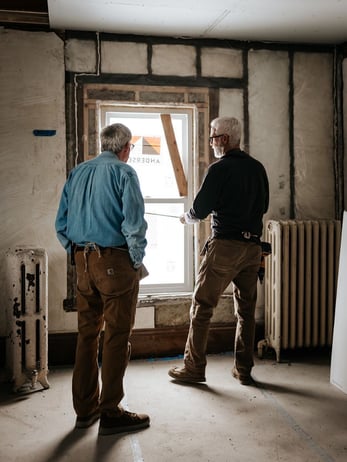
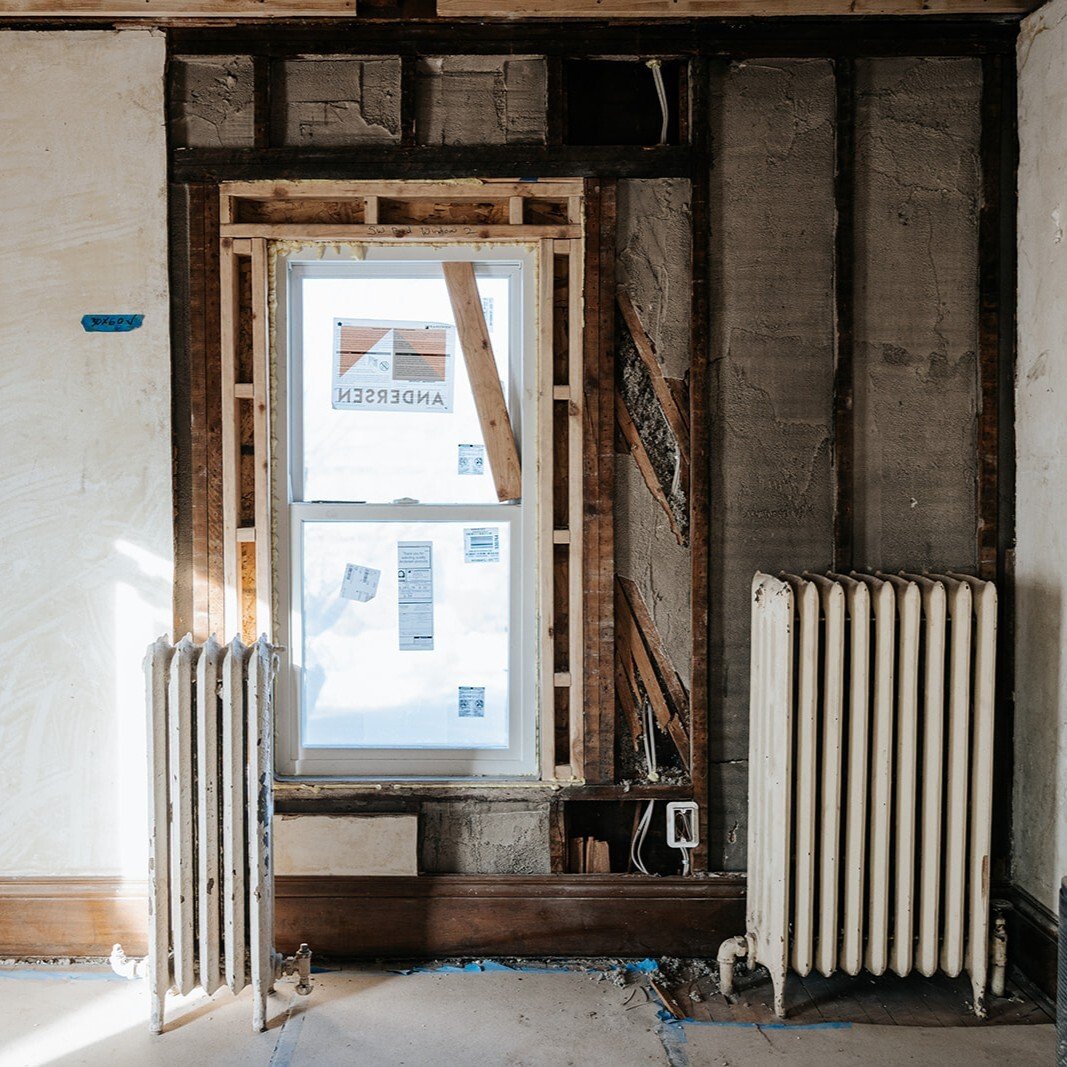
Progress during the rehab project. |
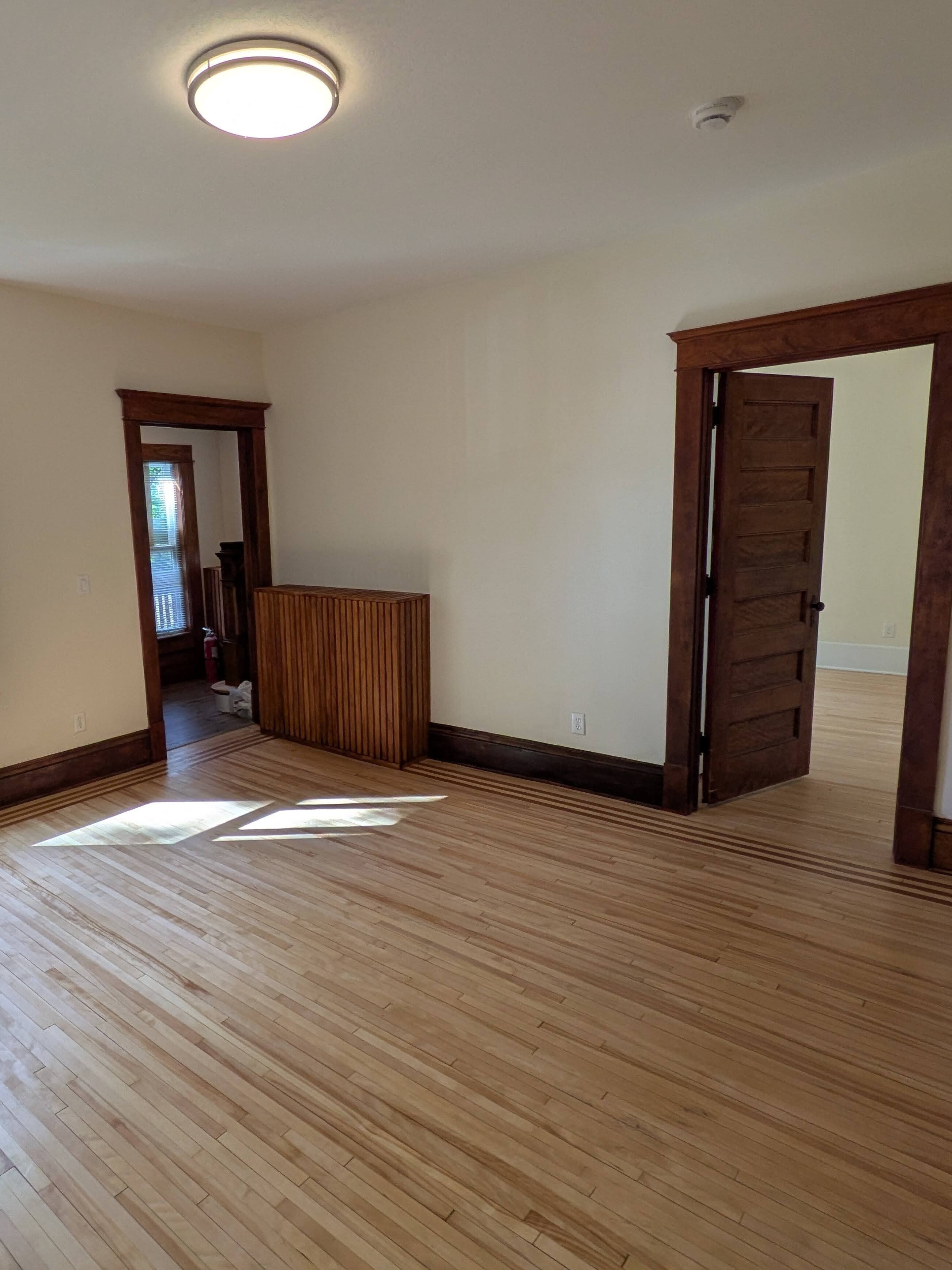
Custom updates like radiator covers and trim. |
But before that could happen, we had a lot of work to do to make that home a decent place to live.
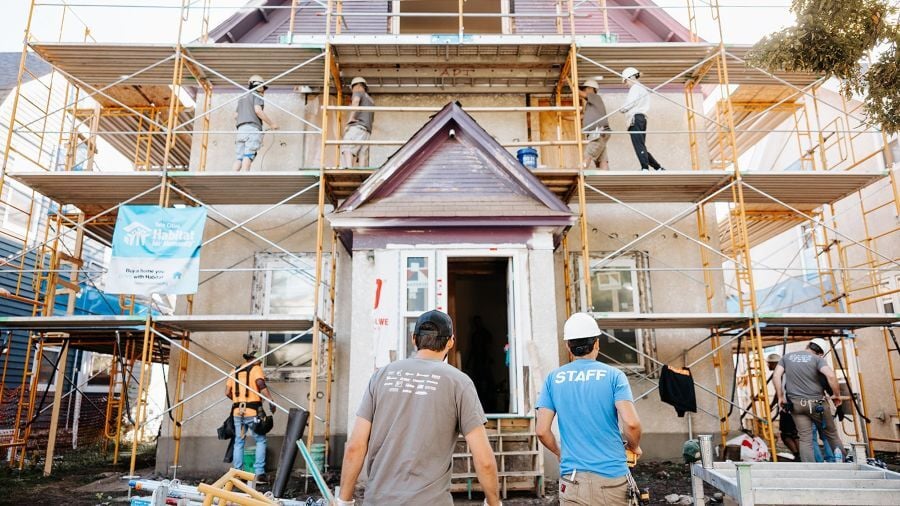
We filled dumpster after dumpster after dumpster with lath and plaster. If you were on site, you'd hear things like "100 bags of sand" or "all you have to do is layer the ½-inch drywall and ¼-inch drywall and add more shims" or "another layer of scaffold." Even "that old bearing wall isn't supporting the floor above."
It becomes impossible to summarize the amount of work we put into this house and the hundreds of decisions we needed to make. For me it was a wonderful mix of feeling like I have the best job in the world combined with dreading unending plaster dust.
When rehabbing a house, there is quite a balancing act of preserving the home’s character—like its original oak woodwork and maple floors inlayed with mahogany—and updating it to be energy efficient. We needed to replace or restore the parts that were in disrepair while doing our best to use resources well. The original trim we kept when possible. When it wasn’t possible, we recreated it out of stained poplar to match instead of oak. We kept the radiators and built covers to match the trim. We utilized spray foam to insulate the odd nooks, dormers, and bump outs that are otherwise very difficult to insulate. And then there was the basement.
The home during renovation. |
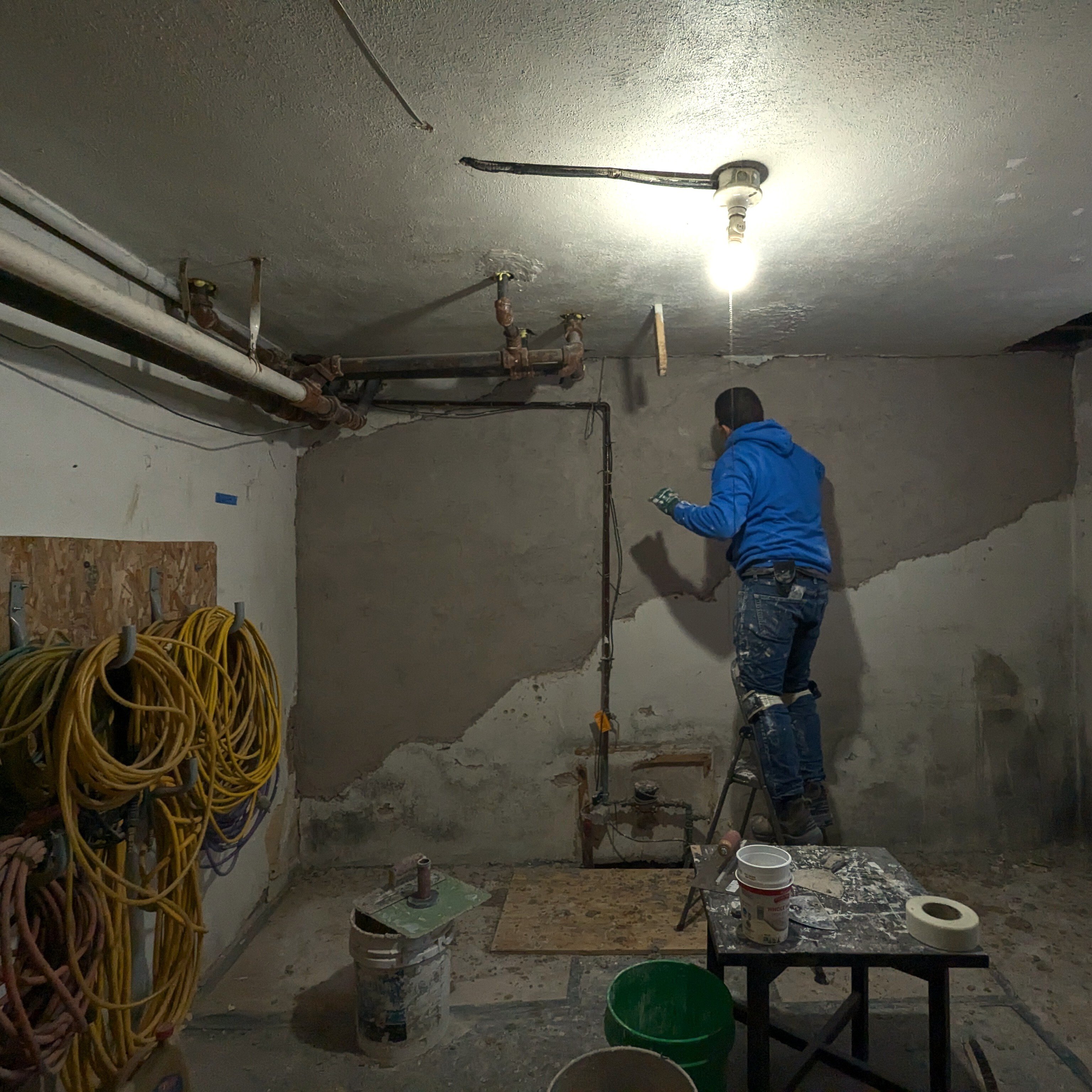
Fixing the foundation in the basement. |
The old limestone foundation was still holding up the house, but much of the plaster had fallen off or the effects of efflorescence had concerningly changed its appearance. The mortar between the stones had lost its structural integrity and was powdered and loose, spilling onto the floor. We had a lot of work to do, but we were fortunate to have a staff member who would prove to be extremely helpful with this restoration.
Felipe, a construction assistant, had a background in plastering – the exact kind of plastering done when the home was built 123 years ago using lime, sand, and water. After tuckpointing the stone with mortar, Felipe was able to help us replaster all the basement walls, restoring them to the original finish they had when the home was built. We are so grateful that Felipe came to us when he did. We were able to put his skillset to work and bond through the long, hard winter in that basement. It became a refuge of sorts during the turbulent time our city was going through—and for volunteers, too. Folks would show up feeling overwhelmed by turbulence in our city and find a sense of normalcy in putting their hands to work on that beautiful, old home. For some, I know—and they know—it was a lifeline.
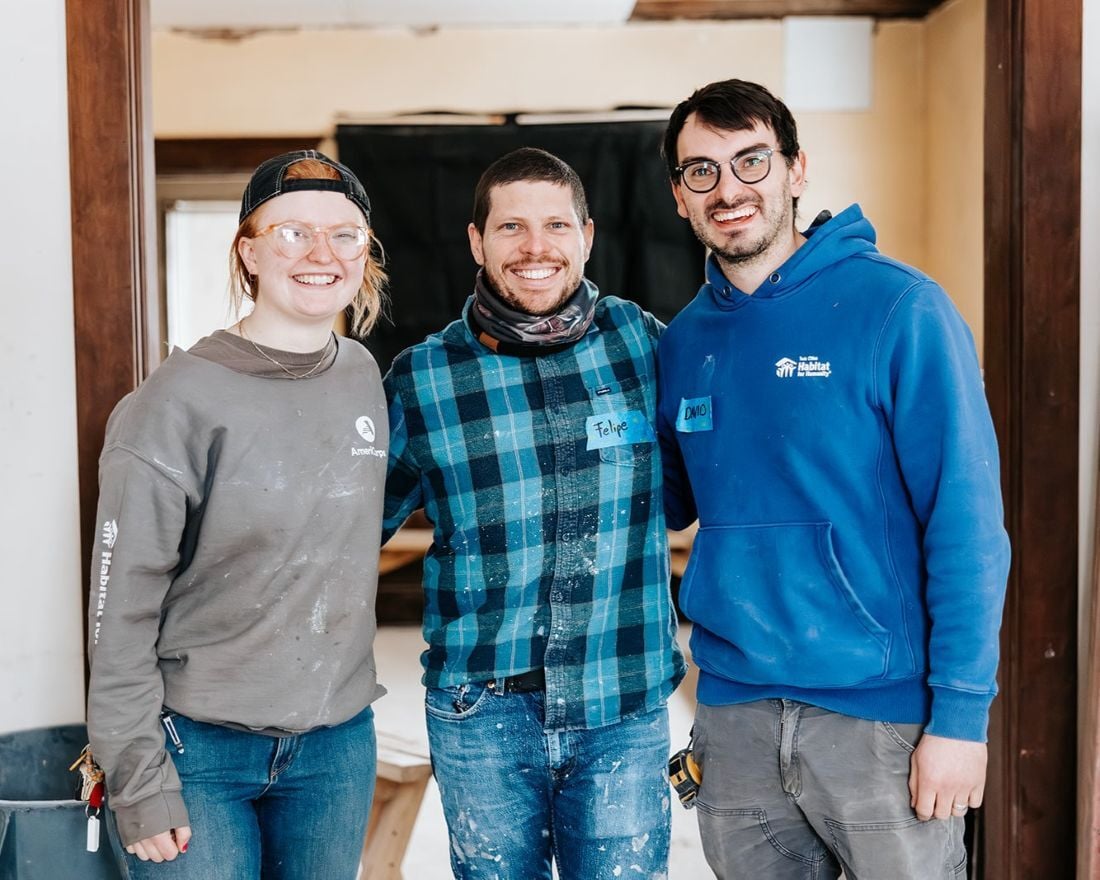
From left to right: Fran, AmeriCorps member; Felipe, construction assistant; and David, site supervisor. |
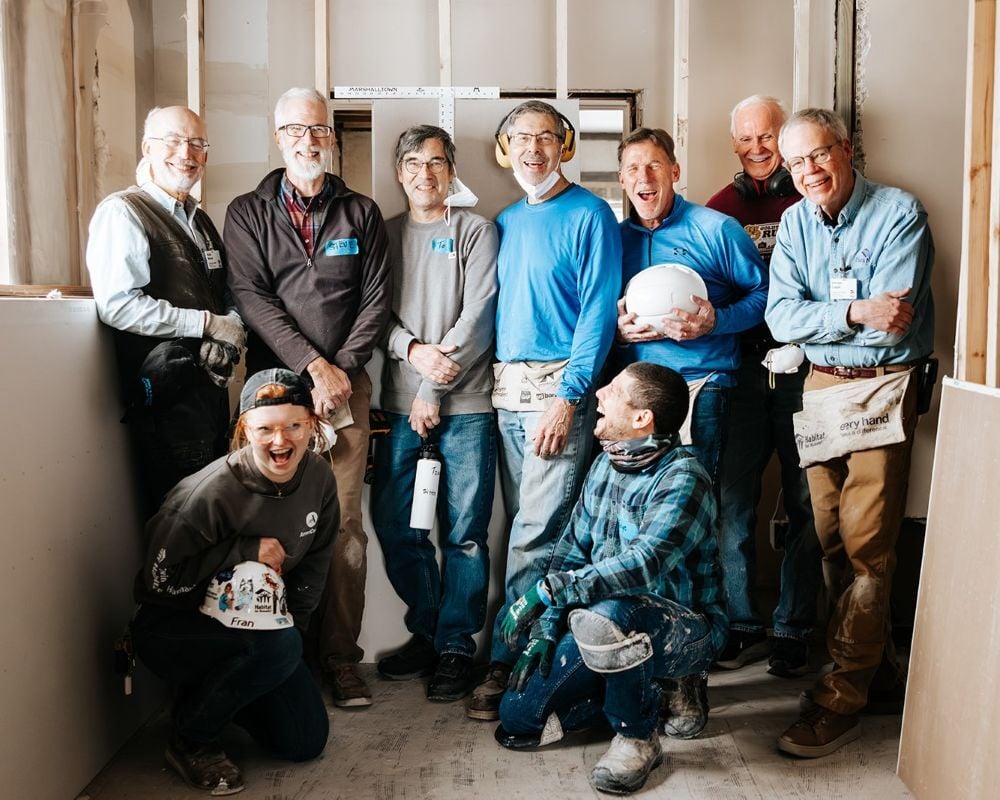
Volunteers and staff. |
I would like to extend a heartfelt thank you to all who joined us as we restored this home. Your time, energy, love, and care are so appreciated. You are the heartbeat of what we are doing, and we couldn’t do this without you.

Your gift unlocks bright futures! Donate now to create, preserve, and promote affordable homeownership in the Twin Cities.

 Guest Blogger : 9:30 AM on January 30, 2015
Guest Blog by Sean Koebele, Volunteer and Constituent Engagement Associate
 Guest Blogger : 10:02 AM on February 4, 2021
Guest Blog by Jake Kirchgessner, Director of Field Operations, with many contributions from Site Staff and AmeriCorps Members Each winter, Twin...
“Yaa mana ofii.” This Oromo language phrase is very common in Ethiopia. It means, “home is everything.” Yemane and Bizunesh, who bought their new...